


Shyla I
Anorexia nervosa is an eating disorder that is described by reduced sexual drive in men, amenorrhea in women, self-induced starvation, and dread of being overweight. The typical weight-loss strategy is food restriction, although other methods, such self-induced vomiting or taking laxatives or diuretics, can also work. In contrast to eating disorders, anorexia does not involve overeating, which is the fast consumption of huge amounts of food in a little period of time. Low weight and a restricted diet are thought to be the cause of starvation or medical complications that kill 5–20% of individuals with the illness. Anorexia nervosa is a condition that links mental and physical well-being.There are two recognized forms of anorexia nervosa:
Restricting type: Some individuals exercise excessively, while others limit their food intake but do not frequently participate in purging or binge eating.
Type of excess eating/purging: Patients frequently overindulge in food cause vomiting or abuse enemas, laxatives or diuretics.
Etiology of Anorexia Nervosa
The etiology of anorexia nervosa is unknown. The only risk factor that has been found is being female. The urge to be skinny is widespread especially among youngsters and obesity is viewed as harmful and unsightly in some societies. Over half of prepubescent girls in the United States either diet or use other weight-control strategies. There appears to be a genetic predisposition, excessive concern or a history of dieting and genome-wide studies have started to pinpoint particular loci linked to higher risk. Social and family variables most likely contribute.
Clinical presentation
Signs and symptoms of anorexia can be mental, behavioral, and physical.
Mental and emotional signs of anorexia nervosa
- severe anxiety about putting on weight.
- obsession with diet, food, and calories.
- Intolerance to specific foods or food groupings.
- Extremely critical of oneself.
- Feeling a strong need to maintain control and downplaying the significance of your low body weight and/or dietary restriction.
Behavioral signs and symptoms
- Changes to eating patterns or habits, such as rearranging food on a plate or eating in a specific order.
- Sudden shift in eating habits, such as avoiding particular food groupings or types.
- Abusing appetite suppressants or diet tablets.
- Excessive and/or compulsive exercise.
- Concealing weight reduction and staying warm by dressing loosely and/or in layers.
Physical signs and symptoms
- Significant weight loss over several weeks or months.
- Failing to maintain a body weight that is adequate for your stature, age, sex, height, and physical condition.
- Inexplicable shift in a child’s or adolescent’s body mass index (BMI) or growth curve.
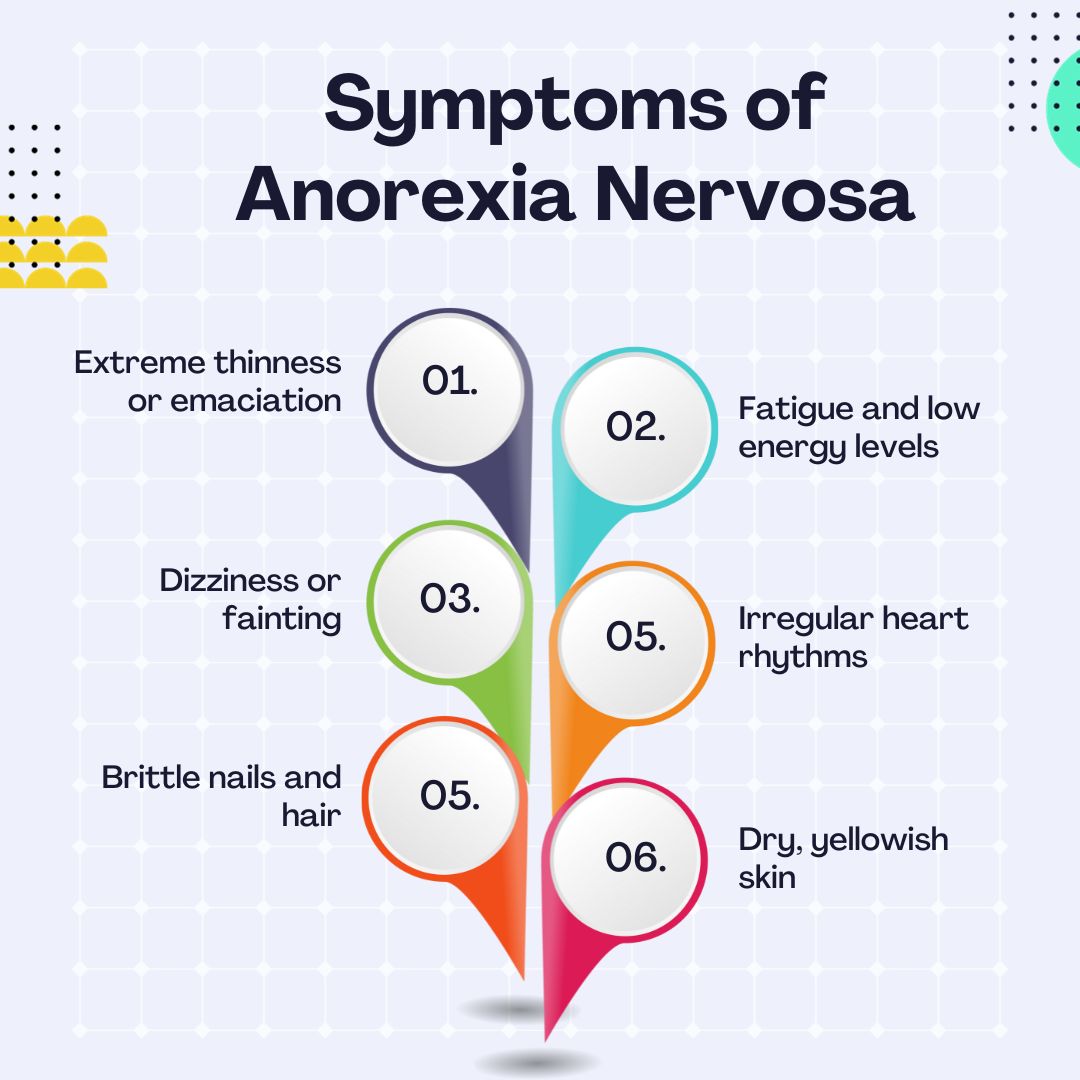
Physical signs and symptoms of anorexia that are side effects of starvation and malnutrition include dizziness and fainting, fatigue, arrhythmia, hypotension, bloating and abdominal pain etc.
Prevention
Focus on a balanced diet
Focusing on developing sustainable and well-balanced eating habits that suit you can be beneficial, regardless of where you are in your recovery process.
Pursue social activities.
Although it is fundamentally a mental health illness, improving eating patterns is crucial to avoiding the worst physical harm that the disorder may cause. It might be beneficial to adopt a more social approach in order to assist prevent the negative effects of anorexia on mental health, particularly its link to self-isolation and, frequently, depression.
Make an appointment with a mental health professional.
Regardless of where you are in your recovery process or whether you have enrolled in an official treatment program, it is always helpful to speak with a mental health professional. Whether they are a therapist, psychiatrist, or nutritional counselor, these professionals are all typically knowledgeable about eating disorders.
REFERENCE
- Akridce, Kathleen. “Anorexia Nervosa.” Journal of Obstetric, Gynecologic & Neonatal Nursing, vol. 18, no. 1, Jan. 1989, pp. 25–30, www.jognn.org/article/S0884-2175(15)32792-1/fulltext, https://doi.org/10.1111/j.1552-6909.1989.tb01613.x. Accessed 19 Nov. 2019.
- Iliadis, Ch., et al. “Anorexia Nervosa: A Literature Review.” Progress in Health Sciences, vol. 10, no. 2, 7 Dec. 2020, pp. 74–79, https://doi.org/10.5604/01.3001.0014.6592.
- “Anorexia Nervosa – Psychiatric Disorders.” MSD Manual Professional Edition, www.msdmanuals.com/professional/psychiatric-disorders/eating-disorders/anorexia-nervosa.
- Cleveland Clinic. “Eating Disorders: Anorexia.” Cleveland Clinic, Cleveland Clinic, 2021, my.clevelandclinic.org/health/diseases/9794-anorexia-nervosa.